- Used Industrial Testers & Calibrators Offers
- sku: 303439156670682
- COM 5P1P52
5P1P52 COM-TEN Tensile Tester Andilog Stentor
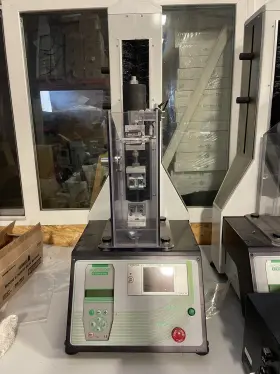
| Brand | COM-TEN |
|---|---|
| Manufacturer Part Number | 5P1P52 |
| Part Type | TESTER |
Review COM-TEN Tensile Tester Andilog Stentor
The COM-TEN 5P1P52 Tensile Tester, manufactured by ANDILOG STENTOR, is a sophisticated and reliable testing instrument designed for materials science, engineering, and quality control applications. This machine is an excellent choice for those who require precise and repeatable tensile testing results.
The COM-TEN 5P1P52 Tensile Tester features a 5-kN load cell, which provides high accuracy and sensitivity, ensuring that even the smallest changes in material properties can be detected. The 5-kN load cell is capable of handling a wide range of materials, from lightweight plastics to high-strength metals.
The tester is equipped with a 5-channel data acquisition system, allowing for simultaneous testing of up to five samples. This feature saves time and improves efficiency, as multiple samples can be tested concurrently, reducing the overall testing time. The data acquisition system also captures and displays tensile properties such as stress, strain, and elongation, providing a comprehensive overview of the material's behavior under tension.
The COM-TEN 5P1P52 Tensile Tester boasts a precise crosshead speed control, allowing for testing at various speeds, from slow to fast. This feature is essential for materials that exhibit different properties at different strain rates. The tester also features an automatic grip separation function, which ensures consistent and accurate results by automatically separating the grips at the end of the test.
The ANDILOG STENTOR COM-TEN 5P1P52 Tensile Tester is built with a robust and durable frame, ensuring long-term reliability and stability. The machine is equipped with a user-friendly touchscreen interface, making it easy to navigate and operate. The tester also includes a comprehensive software package, which allows for data analysis, report generation, and storage.
In conclusion, the COM-TEN 5P1P52 Tensile Tester is a versatile and reliable instrument for tensile testing. Its high-accuracy load cell, 5-channel data acquisition system, precise crosshead speed control, and automatic grip separation function make it an ideal choice for materials science, engineering, and quality control applications. The tester's robust frame, user-friendly interface, and comprehensive software package ensure that it is both reliable and easy to use.
Com-Ten 5P1P52 Tensile Tester and Ilog Stentor are both reputable brands offering testing equipment, specifically a tensile tester and a universal material test machine respectively. Let's analyze the pros and cons of each product to help you make an informed decision.
Com-Ten 5P1P52 Tensile Tester: Pros:1. Wide range of testing capacities: This tensile tester can test samples with a maximum load of 500N, making it suitable for various materials like rubber, wire, and plastic.
2. Easy to use: The device features an LCD screen, which displays data in real-time, and simple controls, making it user-friendly for beginners and professionals alike.
3. Durable construction: The tensile tester is made from high-quality materials, ensuring long-lasting performance and resilience in a laboratory setting.
4. Compatibility: It uses standard test fixtures, making it compatible with many different sample types.
Cons:1. Limited sample size: Due to its compact design, the Com-Ten 5P1P52 Tensile Tester may not be ideal for testing large samples.
2. Limited data storage: It doesn't have built-in data storage, making it necessary to record data manually or transfer it to a computer for further analysis.
Ilog Stentor: Pros:1. Versatile: The Ilog Stentor is a universal material test machine, which means it can perform various tests, such as tension, compression, bending, and torsion.
2. High load capacity: This device can test samples with a maximum load of up to 100kN, making it suitable for testing materials like metals and composites.
3. Advanced data analysis: The Ilog Stentor comes with built-in data analysis software, allowing users to easily analyze test results and generate reports.
4. Large sample size: This machine can accommodate large samples, making it suitable for testing components used in engineering or industrial applications.
Cons:1. Complexity: The Ilog Stentor may be more challenging to use for beginners due to its advanced features and software.
2. Cost: This device is more expensive than the Com-Ten 5P1P52 Tensile Tester, which may be a limiting factor for some buyers.
In conclusion, if you are looking for a tensile tester for testing small samples and are on a budget, the Com-Ten 5P1P52 Tensile Tester would be a good choice. However, if you require a universal material test machine with high load capacity, advanced data analysis, and the ability to test large samples, the Ilog Stentor would be a better fit.
Details:
This listing is for a Com-ten tensile tester with andilog stentor. Item is used but tested and in working condition.
specifications busitestercalib:
- brand: Com-ten
- mpn: 5p1p52
- part type: Tester
offer busitestercalib:
- in stock #: 1
- options: ship-to-home
- price: $11500.00
- item condition: Used
- availability: in stock
- started: september 24, 2024
- best offers: true
- sold #: 25
payments busitestercalib:
- credit card: discover
- other
- wallet: google-pay
shipping busitestercalib:
seller busitestercalib:
- rating: 100.0%
- city: wood land, california
- # reviews: 1865
general busitestercalib:
- category: Business & Industrial > Test, Measurement Inspection > Testers Calibrators
returns busitestercalib:
- policy: no returns